Living with Wildlife
Ucluelet is a wild place. We live on the edge. Our residents share this incredible landscape with an abundance of wildlife, both aquatic and terrestrial. It is the responsibility of everyone, both local and visitor, to keep wildlife wild and our community safe.
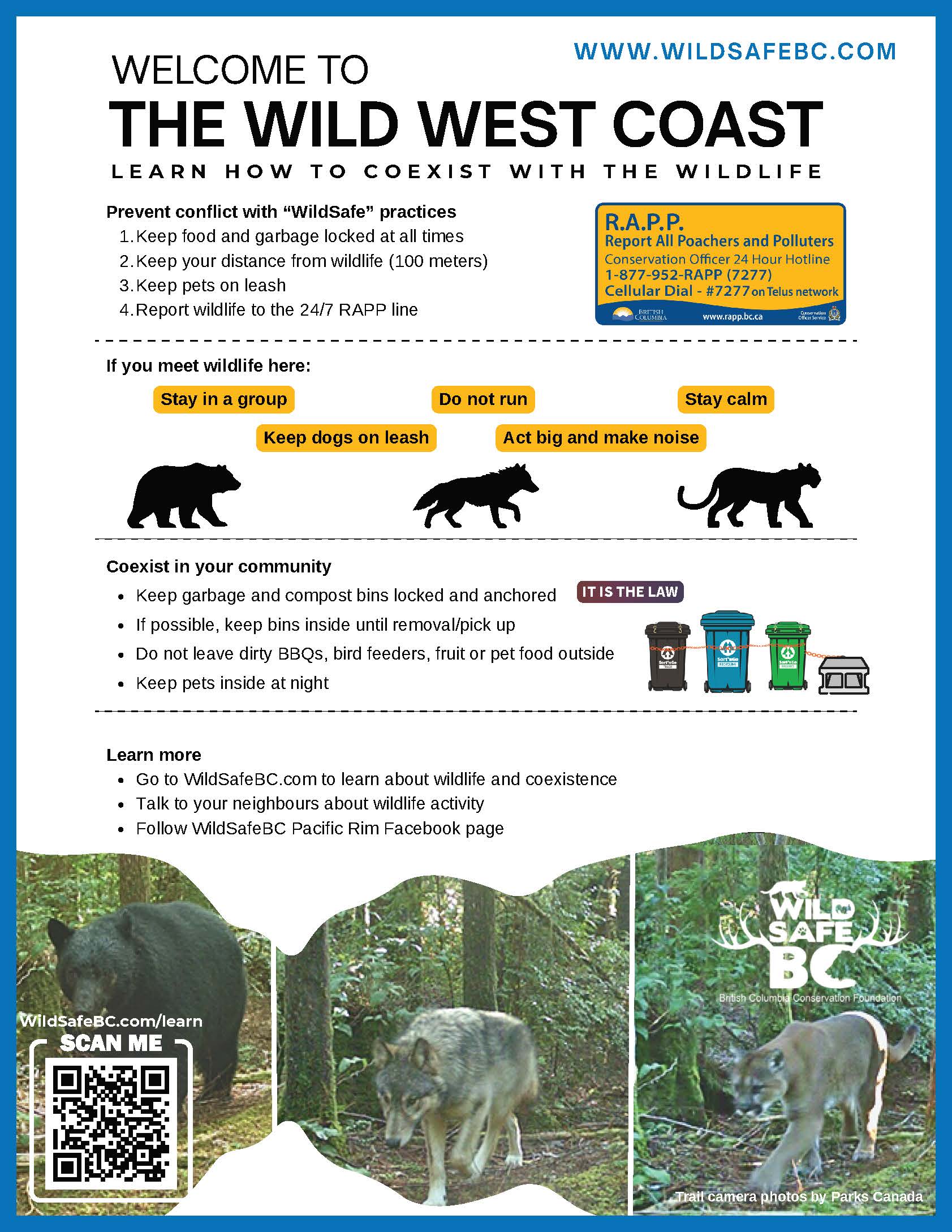
Prevent conflict with “WildSafe” practices
- Keep food and garbage locked at all times.
- Keep your distance from wildlife.
- Always keep your pets on leash when exploring the trails around Ucluelet.
- Report wildlife to the 24/7 RAPP line 1-877-952-7277.
Coexist with wildlife in the community
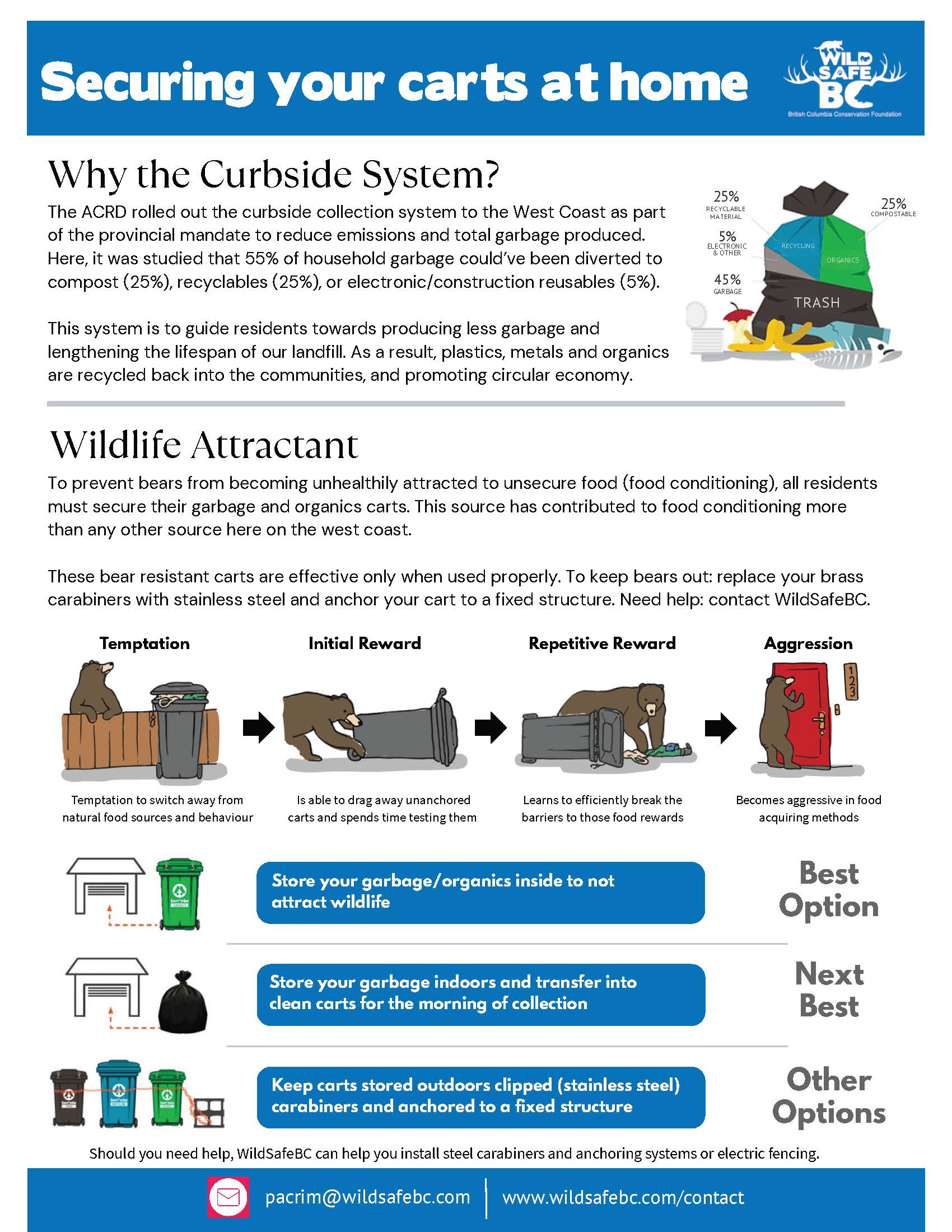
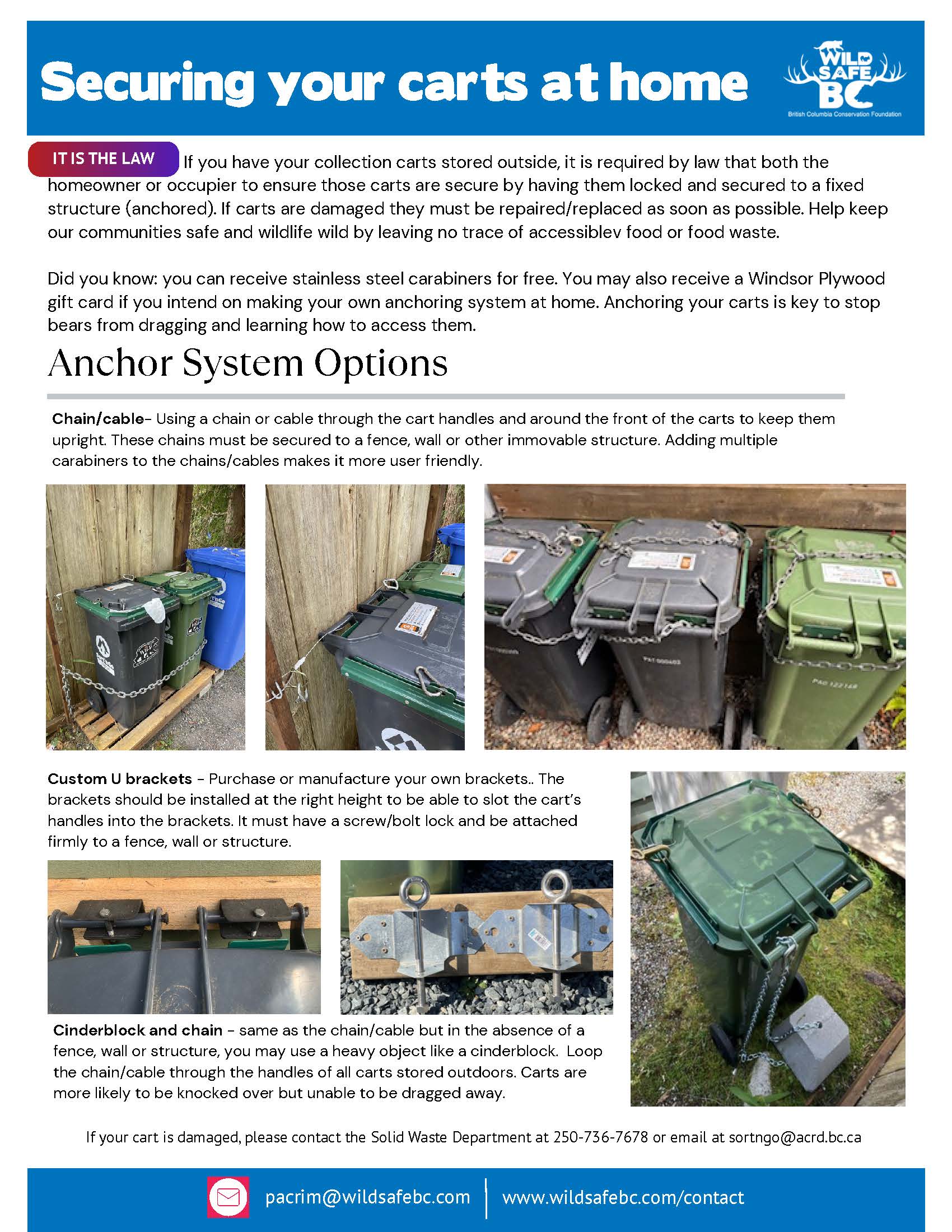
- Keep garbage and compost bins locked and anchored.
- If possible, keep bins inside until removal/pick up.
- Do not leave dirty BBQs, bird feeders, pet food and other attractants outside.
- Keep pets inside at night.
If you are here for a quick visit, it is imperative you follow the local sorting and storage guidelines. If you are staying in an Airbnb, Bed and Breakfast or other short-term accommodation ask the home operator how best to dispose of garbage safely.
Frequently asked Questions:
1. What’s the difference between “habituated” and “food-conditioned” behaviour?
Habituation refers to the decreased level of natural wariness to people over multiple interactions. Food conditioning refers to an animal that learns to associate humans with unnatural food sources. Food conditioned animals may approach humans and become aggressive as they seek out this unnatural food.
2. When do Conservation Officers respond to my call?
Conservation Officers respond to conflicts with dangerous wildlife where there is a risk to public safety. COS response could be to monitor an animal’s behaviour or to provide advice on how to reduce conflict. An animal is only destroyed when there is repeated dangerous wildlife encounters, and situations where dangerous wildlife has become habituated and/or food conditioned. Following WildSafe practices where you live, work and play is how you can prevent wildlife from becoming habituated and food conditioned.
3. Why are animals not relocated (translocated)?
Relocating an animal does not solve the source of the problem. Large carnivores can’t be relocated because this does not solve the source of the problem. A food-conditioned animal that has learned to access unnatural food will either return to the source, find a new unnatural food source or be killed in another animals natural territory.
4. Who cares if my dog is off leash?
Dogs are an attractant to large carnivores. Off-leash dogs cause safety concerns to you, your dog and the wildlife. Wolves, cougars and bears have attacked off leash dogs on numerous occasions. To keep the wildlife, yourself and your dog all safe, please keep your dog on leash. Migrating shorebirds and other wildlife are stressed by roaming dogs and may not acquire the energy to finish their migration. Having your dog off-leash in the PRNPR or municipality will result in a fine.
Additional Resources
Wild Safe BC Info Graphics